
iris EFIS Pro display 57
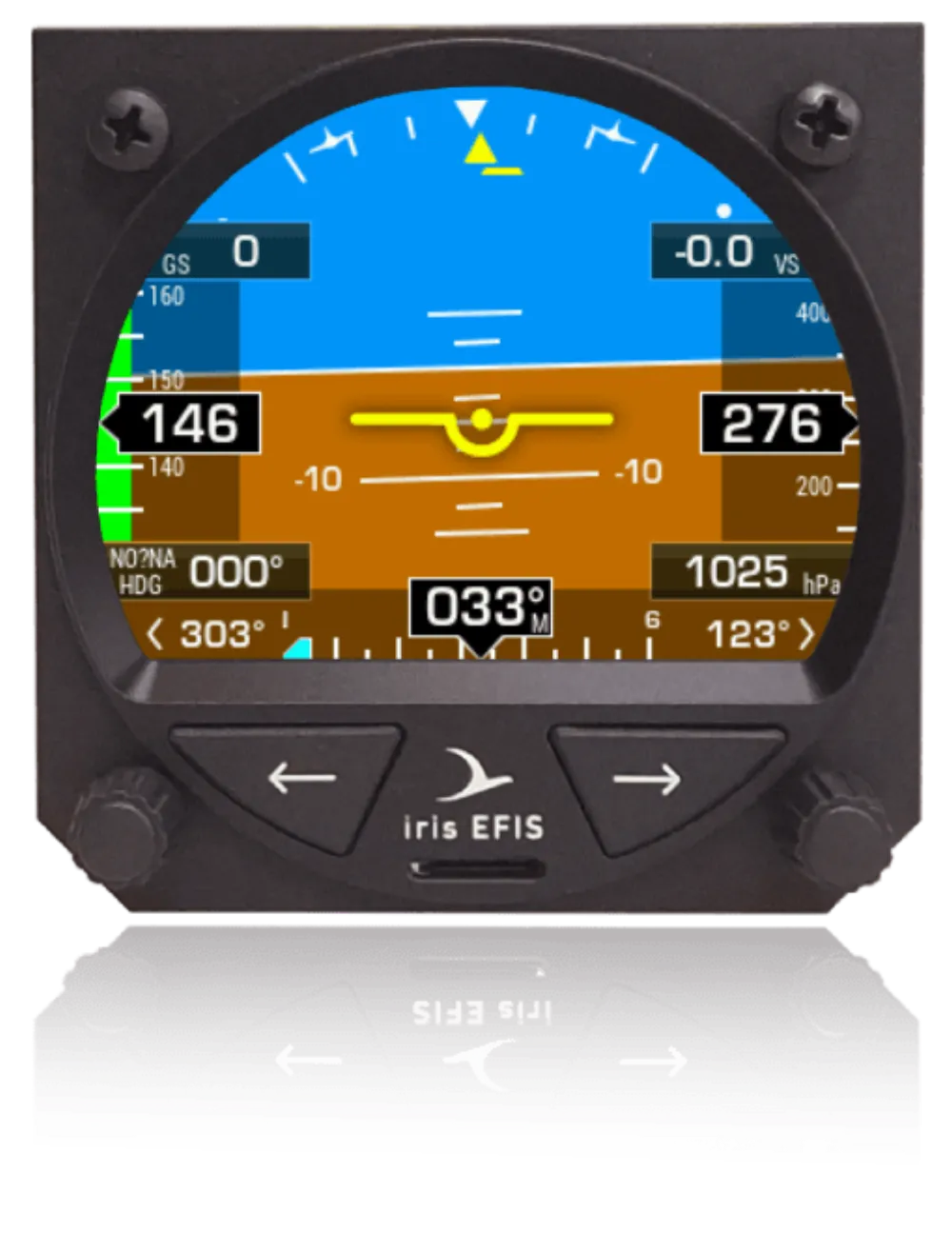
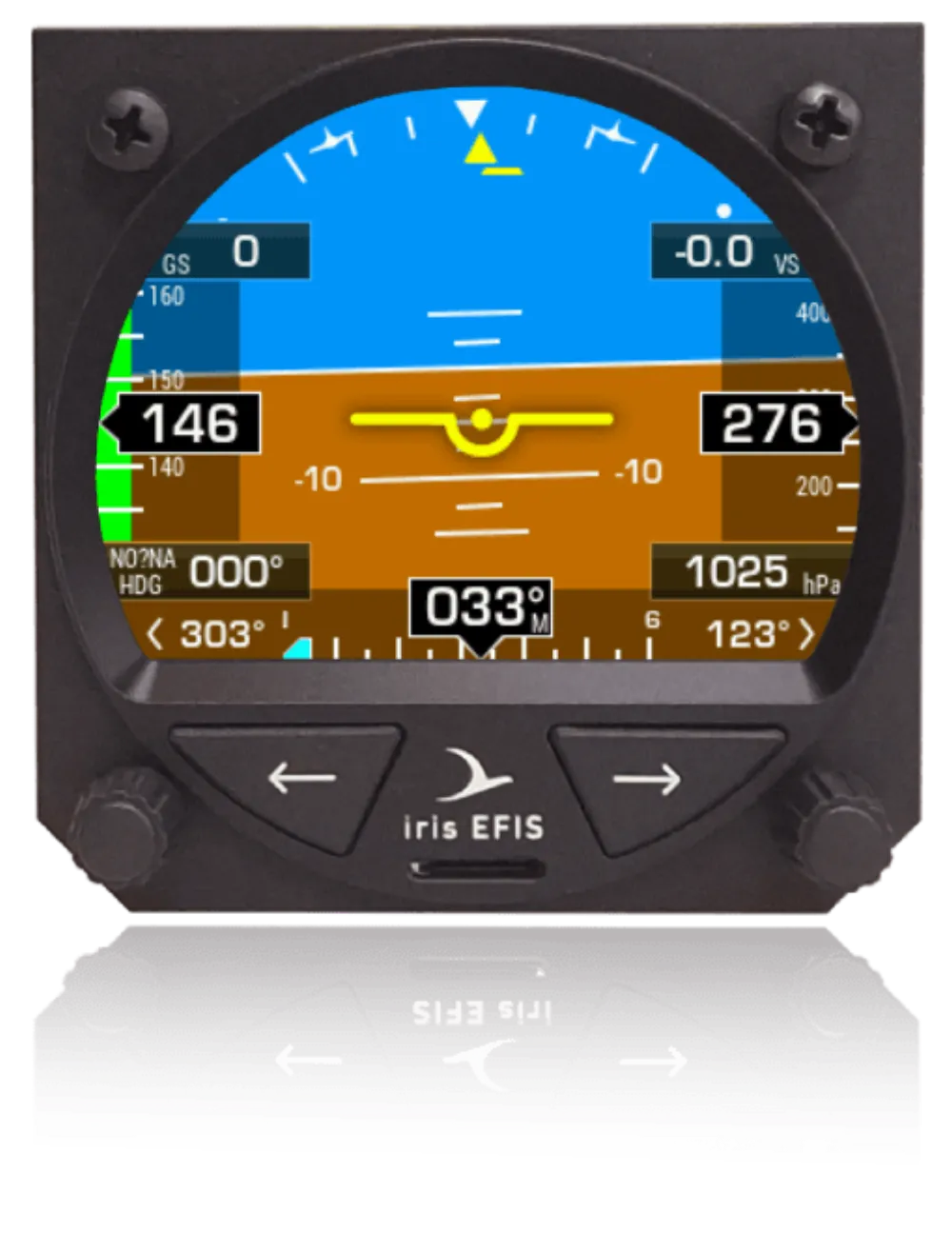
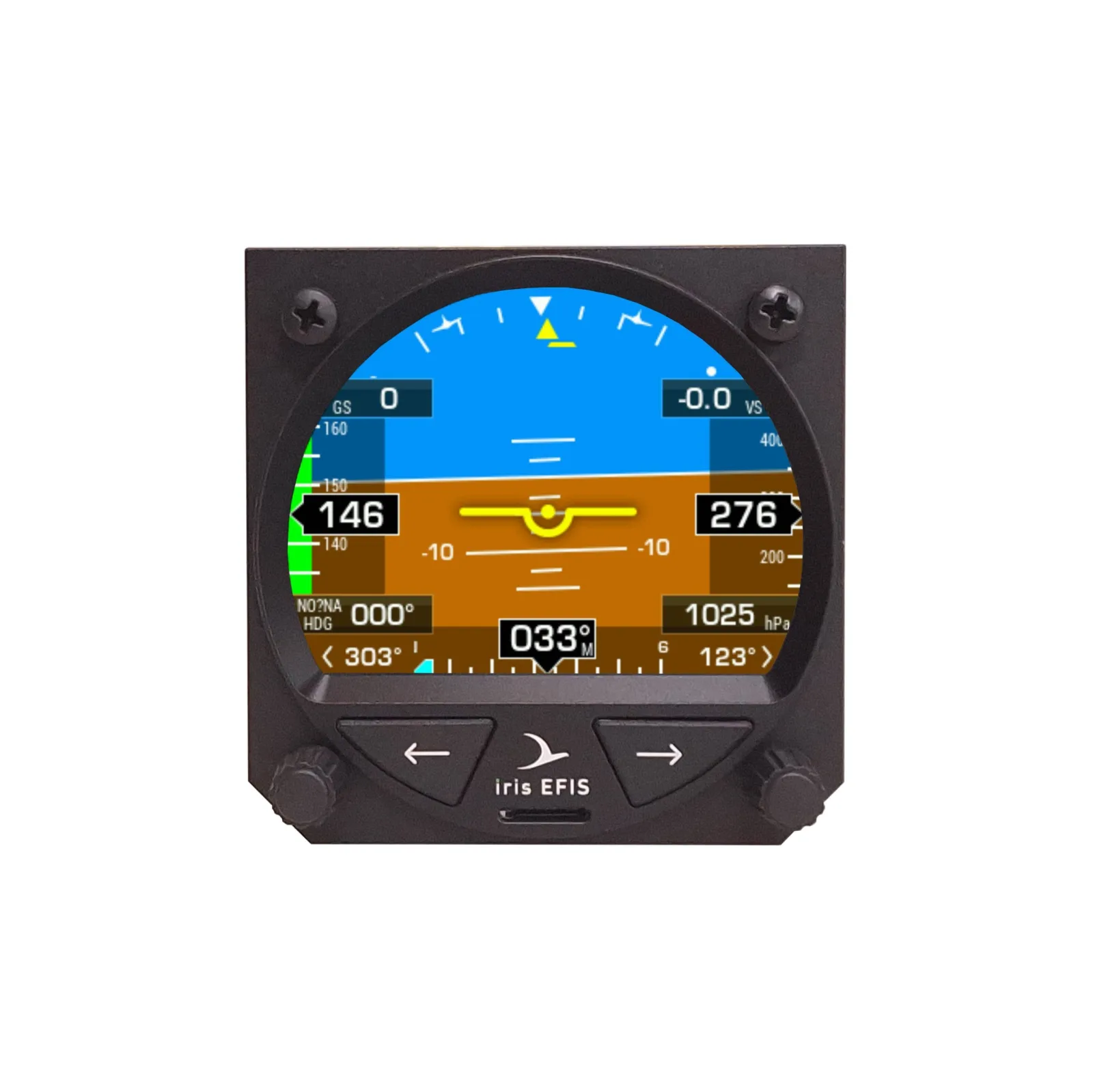
A second screen for an iris EFIS: the same 57 mm instrument without sensors, fed by one CAN cable — one face for the horizon, one for the map.
- The iris EFIS with the sensors left out — the same software and pages, fed over one CAN cable
- Horizon on one instrument, map on the other, without paying for a second set of sensors
- Over WiFi it becomes a panel-mounted PFD for an iLevil or BOM
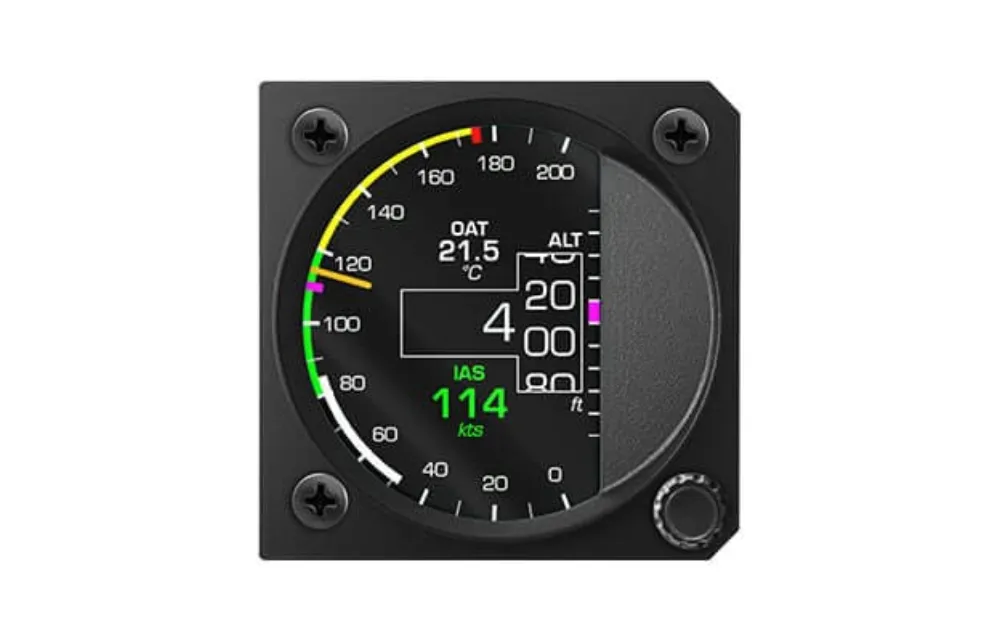
You may also like.
Details.
The iris EFIS Pro display is the iris EFIS with the sensors left out. It runs the same software and shows the same pages, but takes its attitude, air data and position from somewhere else: an iris EFIS over a single CAN cable, or an iLevil or BOM over WiFi. That makes it the second screen an EFIS panel wants — the horizon on one instrument, the map on the other, without paying for a second set of sensors.
Two uses
Beside an iris EFIS or EFIS Pro in the same panel, it is the navigation screen: route, terrain, airspace and airport information on their own face while the PFD stays a PFD. In the rear seat of a tandem, it repeats the front-seat picture for the instructor. Either way, one cable.
With a Levil sensor
Connected over WiFi to an iLevil 3 AW, an iLevil AP or a BOM, the display becomes a panel-mounted primary flight display for a sensor that would otherwise only feed a tablet.
In the panel
- Standard 57 mm cutout, 62 × 62 × 52 mm
- 2.5 inch transflective display
- 9–30 V DC
- CAN bus to an iris EFIS; WiFi to Levil devices
- No pitot, static, GPS or AHRS of its own
Also available as the iris EFIS Pro display 80, in an 80 mm cutout with a 3.5 inch display. Non-TSO: for ultralight, light-sport and Experimental aircraft.
Questions pilots ask.
Does it work on its own?
No — it has no pitot, static, GPS or AHRS of its own. It takes attitude, air data and position from an iris EFIS over CAN, or from an iLevil 3 AW, iLevil AP or BOM over WiFi.
Can it go in the rear seat?
Yes — in a tandem it repeats the front-seat picture for the instructor over one CAN cable.