
iris display 80
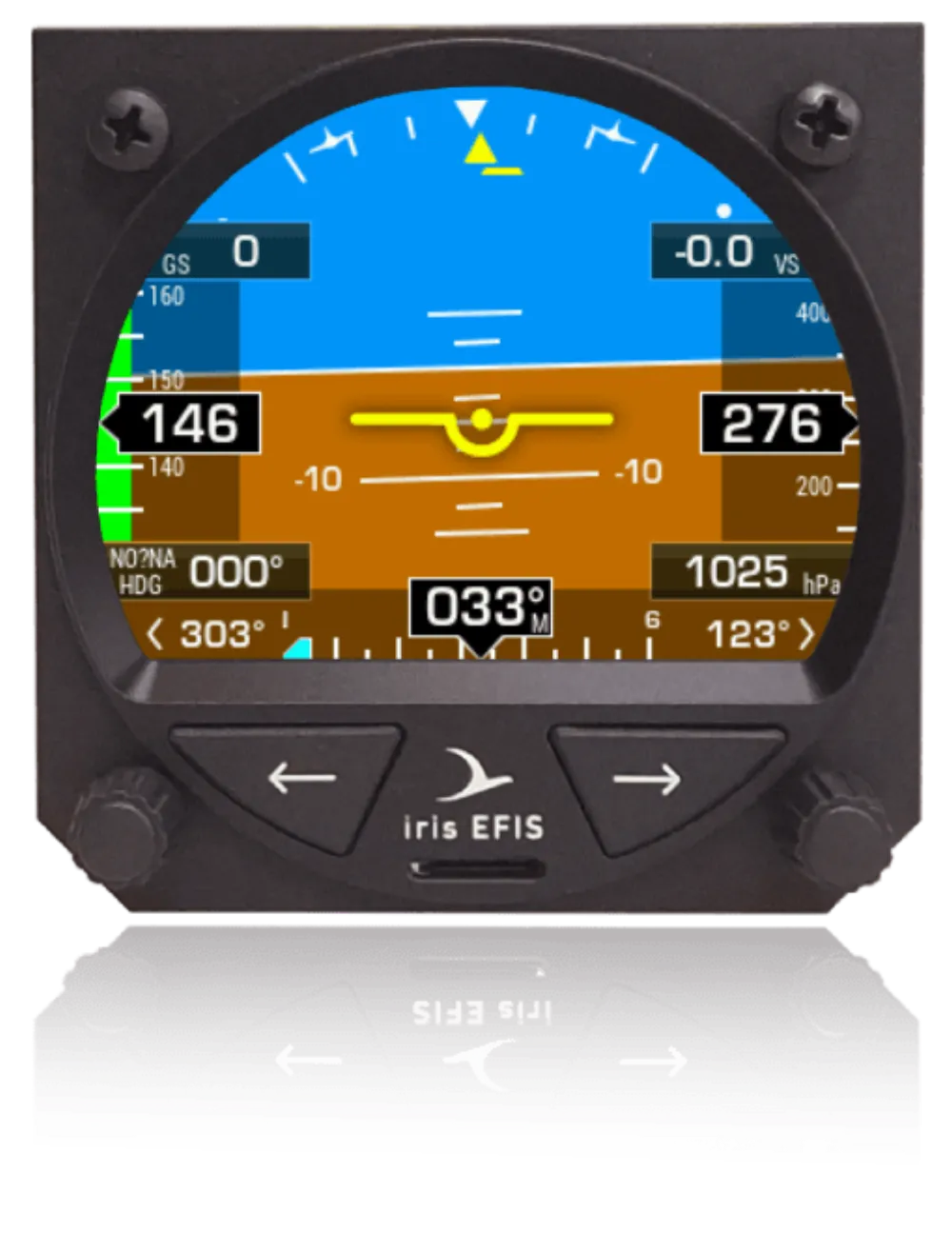
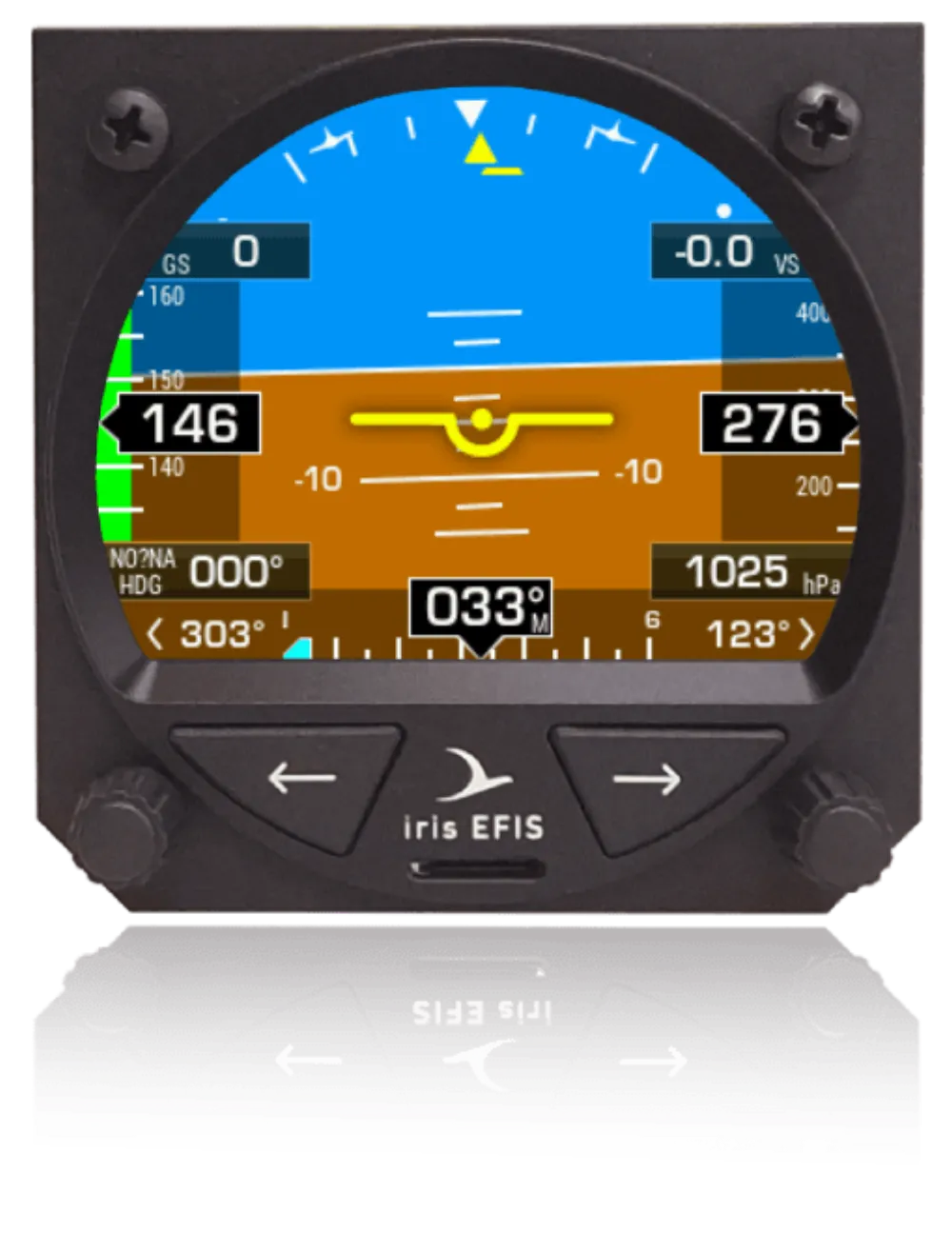
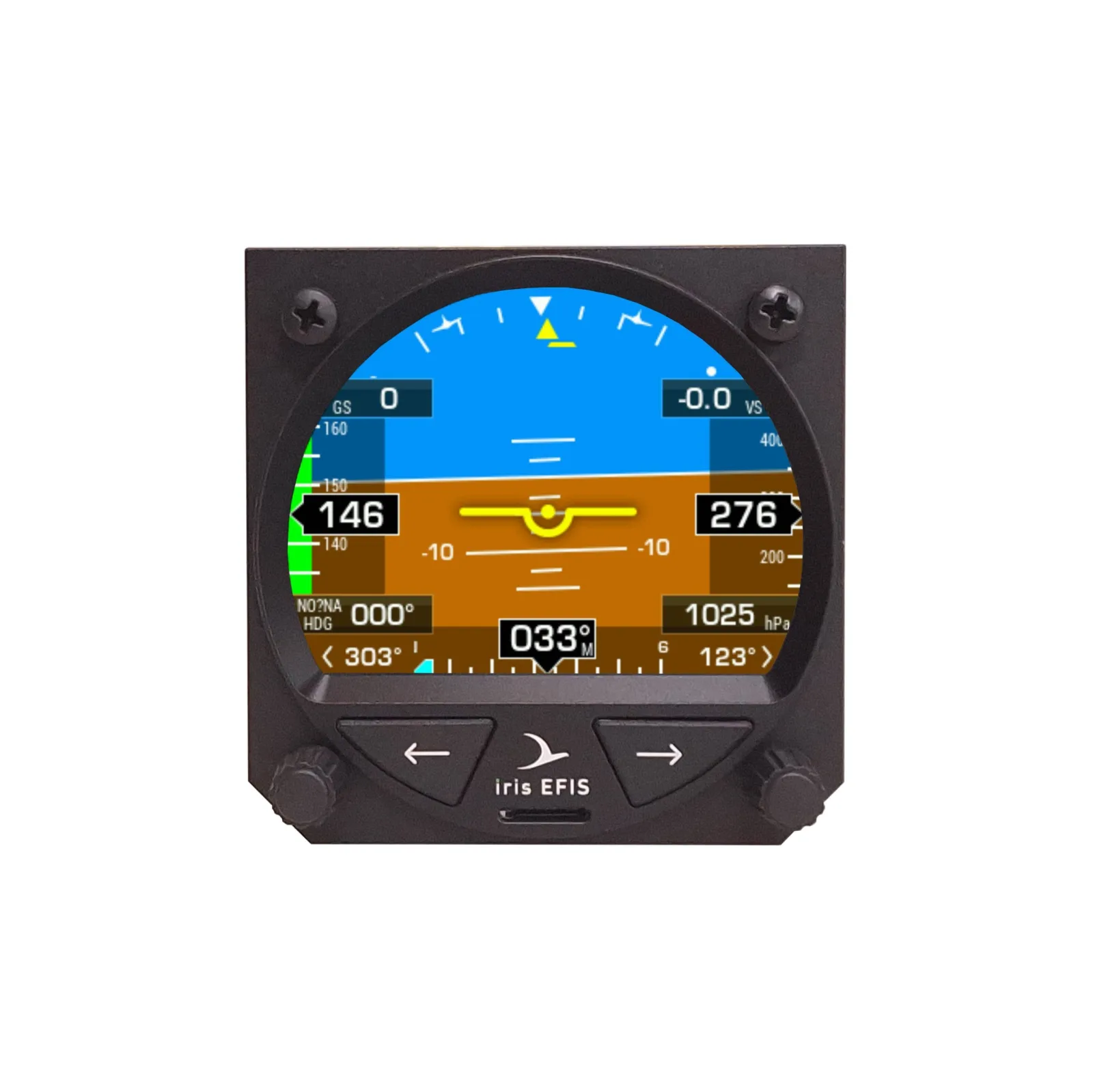
The iris face without the sensors: an 80 mm repeater with a 3.5 inch display that shows what another iris measures, over one CAN cable.
- Repeats any iris over one CAN cable — a rear-seat repeater or a second face for the same value
- No pitot, static or GPS connection of its own
You may also like.
Details.
The iris display is an iris instrument with the sensors left out. It has the same round face, the same transflective screen and the same configurator — but instead of measuring anything, it shows what another iris on the CAN bus has measured. One cable carries the data and the power. This is the 80 mm version, behind a 3.5 inch display.
Where it goes
In the back seat of a tandem, so the instructor sees the same airspeed or altitude as the student without a second set of plumbing. Or on the other side of a single-seat panel, so a value you want in two places is in two places. Or beside an iris all-in-one, giving airspeed its own face while the all-in-one keeps altitude and vertical speed.
Any iris, any value
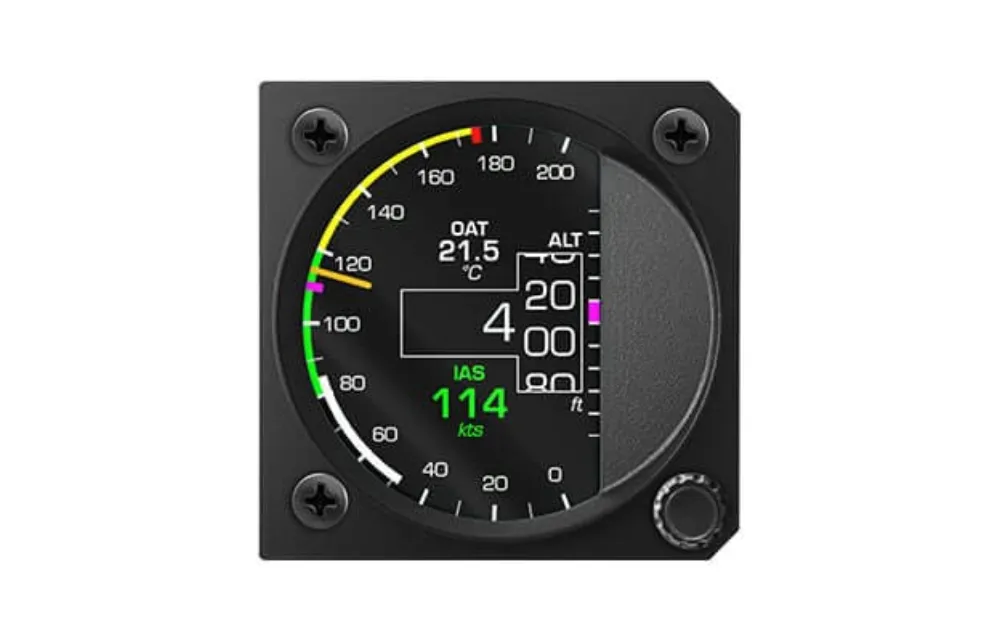
The display shows whatever the connected instrument provides: airspeed from an airspeed indicator, altitude and vertical speed from an altimeter, G load from a G-force, the clocks from a chrono. Which values, and how they are arranged, is set in the configurator like any other iris.
In the panel
- Standard 80 mm cutout, 82 × 82 × 52 mm
- 3.5 inch transflective display
- 9–30 V DC over the CAN bus
- No pitot, static or GPS connection needed
Also available as the iris display 57 for a 57 mm cutout. Non-TSO: for ultralight, light-sport and Experimental aircraft.
Questions pilots ask.
What does it show?
Whatever the connected iris provides: airspeed from an airspeed indicator, altitude and vertical speed from an altimeter, G load from a G-force, the clocks from a chrono. Which values, and where, is set in the configurator.
Does it need its own plumbing?
No. One CAN cable carries the data and the power — there is no pitot, static or GPS connection on the display.