
PowerFLARM Eagle mobile
The Eagle as a self-contained portable: FLARM collision warnings with a built-in display, speaker and battery, ready to move between aircraft.
- A complete FLARM system with its own display, speaker and battery
- Nothing to install — moves between aircraft in seconds
- Transmits as well as receives, so other aircraft see you too
- Configured from your phone over the built-in WiFi portal
You may also like.

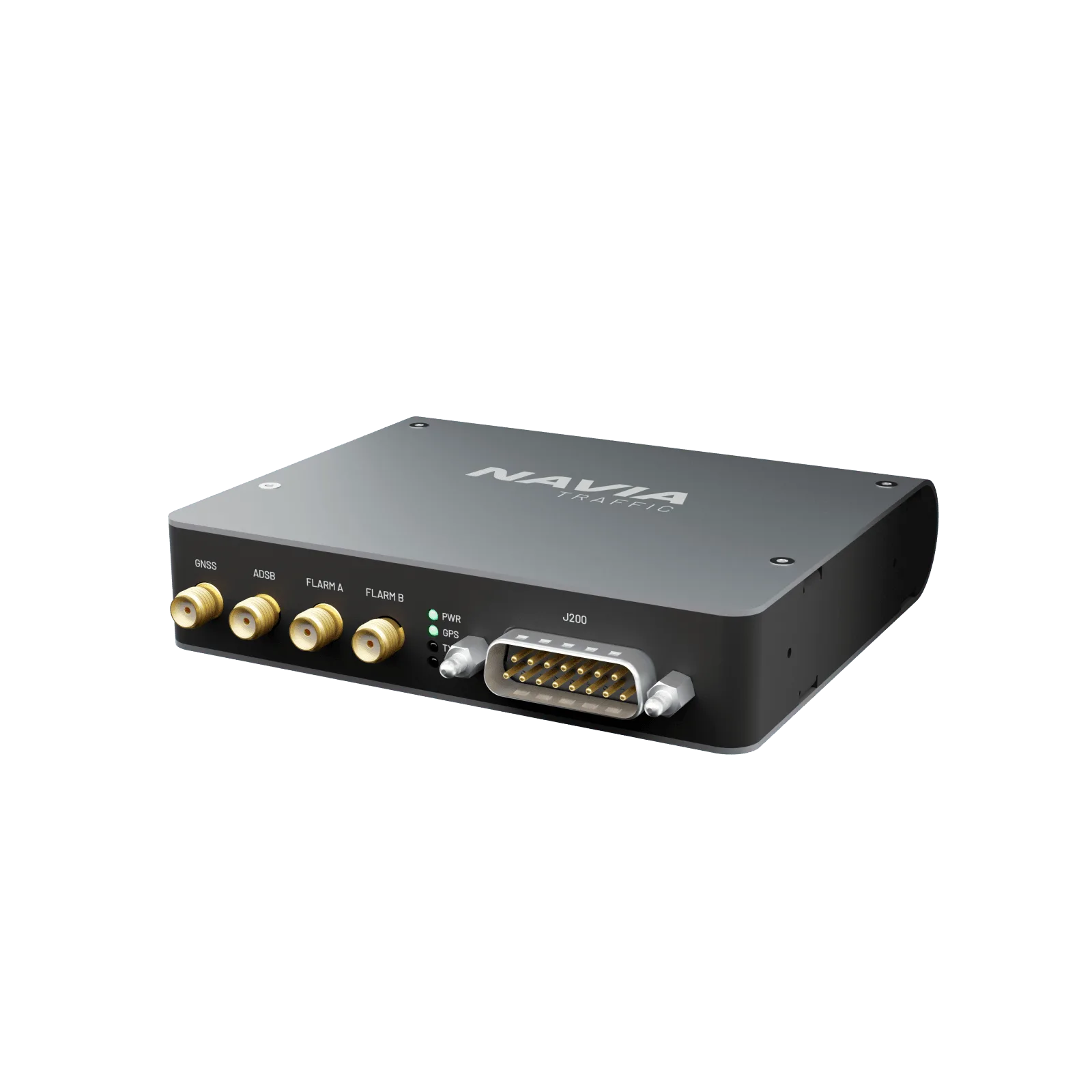

Details.
A fixed installation is the right answer for an aircraft you own. It is the wrong answer for a club fleet, a rented glider, a tow plane you fly twice a month, or a competition in somebody else's aircraft. The mobile Eagle is the same PowerFLARM electronics as the panel unit, in a housing that brings its own display, speaker and battery.
Nothing is cut, drilled or wired. Put it where you can see it, switch it on, fly. It transmits as well as receives, so the aircraft around you see you too — a portable that only listened would protect nobody but its owner.
What you see and hear
The built-in screen draws the traffic around you and the warning itself: which direction the conflicting aircraft is in, whether it is above or below, and how far away. The speaker carries the alert without a headset connection, which matters in exactly the situation a portable exists for — an aircraft whose audio system you have never seen before.
This is the FLARM-only model
The mobile ADS-B version adds FLARM's own ADS-B In module, so it also shows traffic from Mode-S transponders: airliners, tow aircraft and most powered traffic. Both mobile units have a fixed-installation counterpart, if the aircraft turns out to be yours after all.
Configured from your phone
The unit raises its own WiFi access point on power-up, with the key printed on the housing. The portal holds status, FLARM settings, file transfer, the logbook and a range analyser that plots the range actually achieved across twenty 18° sectors, from real receptions in flight. Firmware, the obstacle database and licences load through the same page.
It grows with licences
The FLARM module takes licences you can buy at any time and upload through the portal: the IGC flight recorder, ENL for motorgliders, antenna diversity and Garmin TIS.
One honest limitation
A portable sees what its antennas can see from where you put it. A unit lying flat under a carbon canopy rail will not match a properly placed aerial on the fuselage. Give it the best view of the sky the cockpit allows, keep it clear of metal and carbon, and read the range analyser after a few flights rather than assuming.
Questions pilots ask.
Who is the mobile Eagle for?
Anyone flying an aircraft that is not theirs to modify: club fleets, rented gliders, a tow plane flown twice a month, a competition in a borrowed aircraft.
Does it protect other pilots too, or only me?
Both. It transmits its own predicted flight path like any FLARM, so FLARM-equipped aircraft around you are warned about you as well.
Will it match an installed unit for range?
Not necessarily. A portable sees what its antennas can see from where you put it; metal and carbon around it cost range. Check the range analyser after a few flights.