
Navia Sense Airplane Pro HS
The Navia sensor unit for fast powered aircraft: airspeed to 500 kt with a high-speed sensor, altitude, AHRS, angle of attack, high-accuracy OAT and a 25 Hz GNSS.
- The Airplane Pro with a high-speed sensor — airspeed to 500 kt for aircraft that cruise above 250 kt
- Angle of attack from its own pressure port, altitude, AHRS, high-accuracy OAT and a 25 Hz GNSS
- With the Core Pro, its own air data and position: a failure elsewhere does not take the flight instruments with it
- Navia Sense Airplane Pro HS
- GNSS antenna, SMA, 1.5 m
- OAT sensor with crimped pins for the J300 connector set
See it fly.
You may also like.
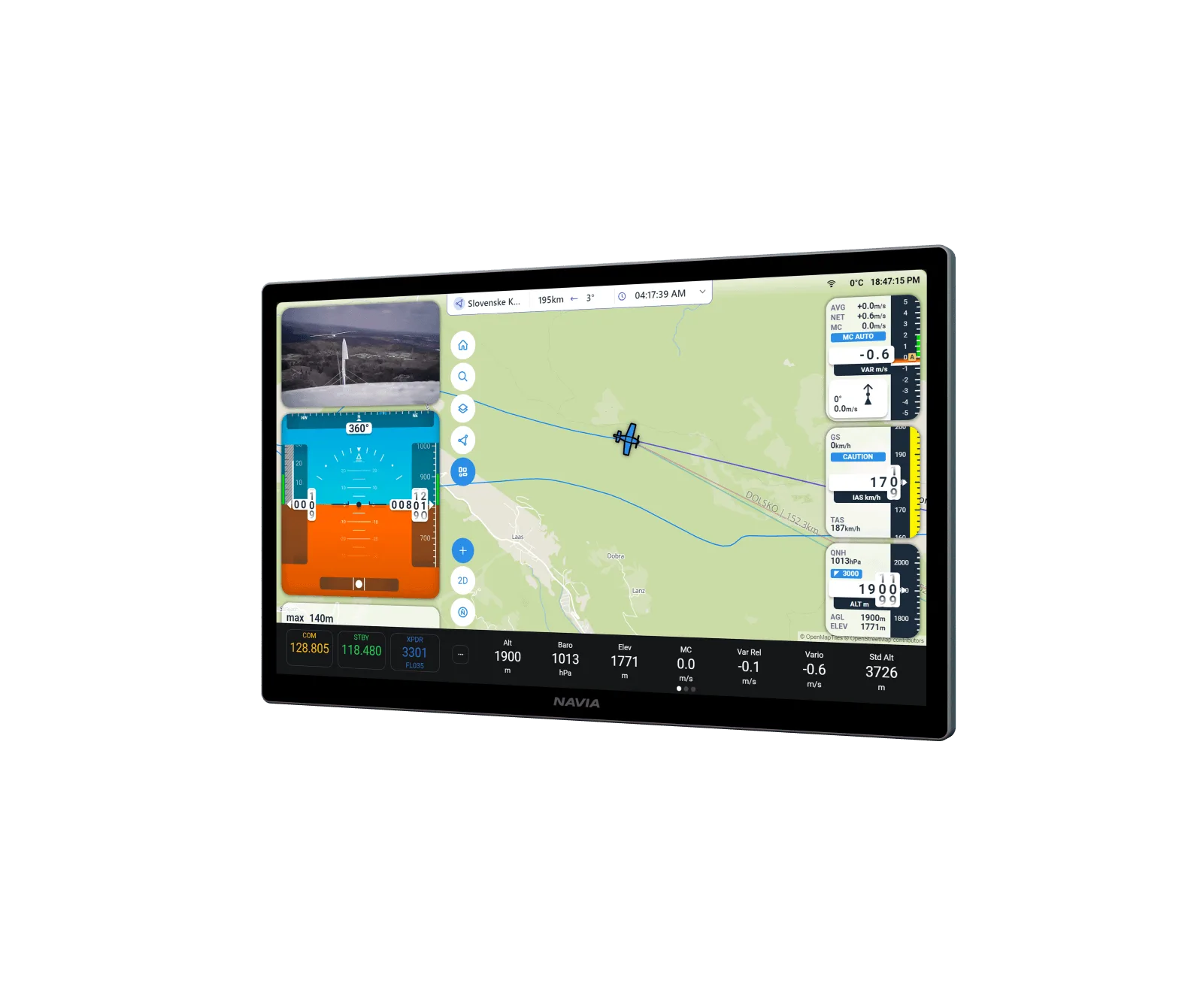
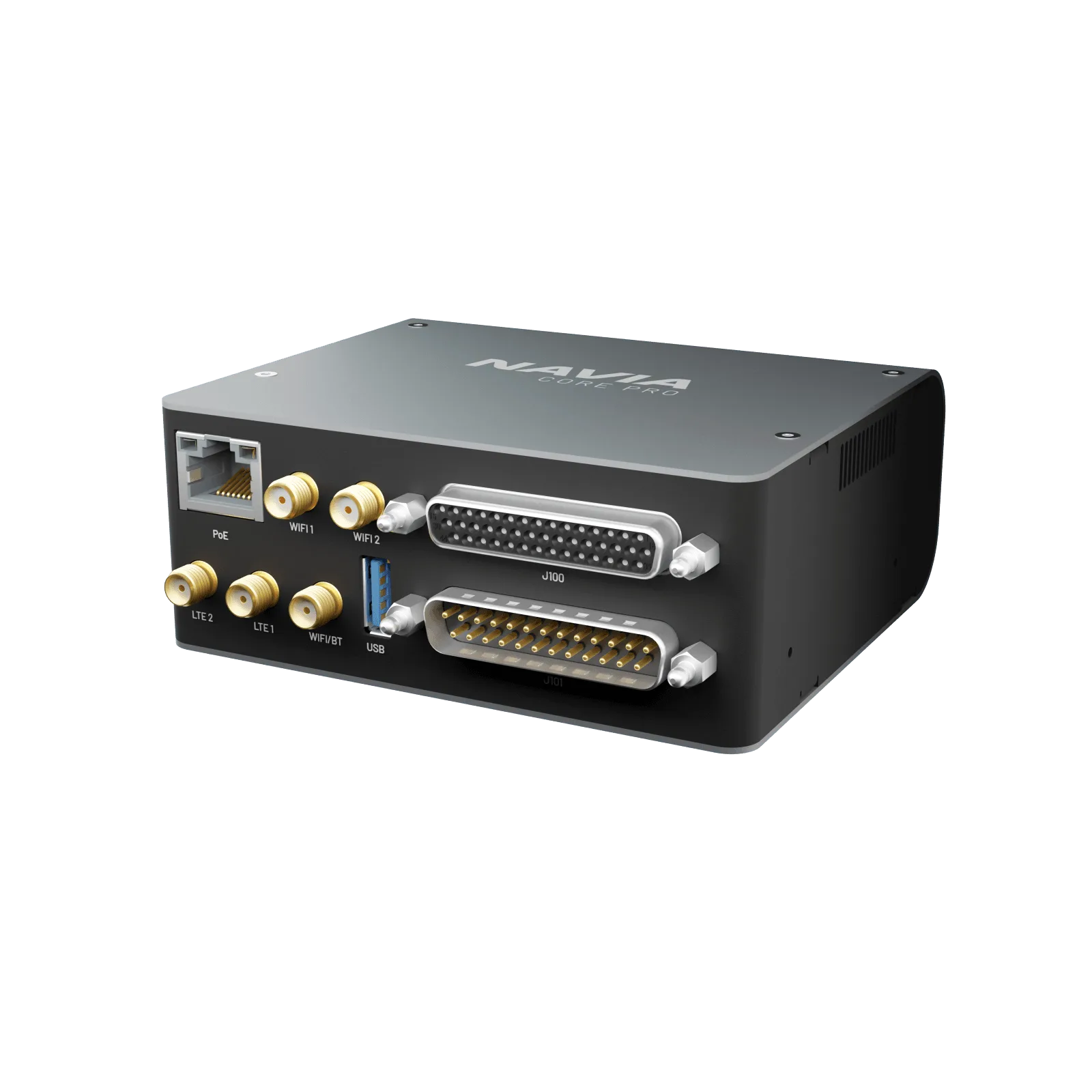
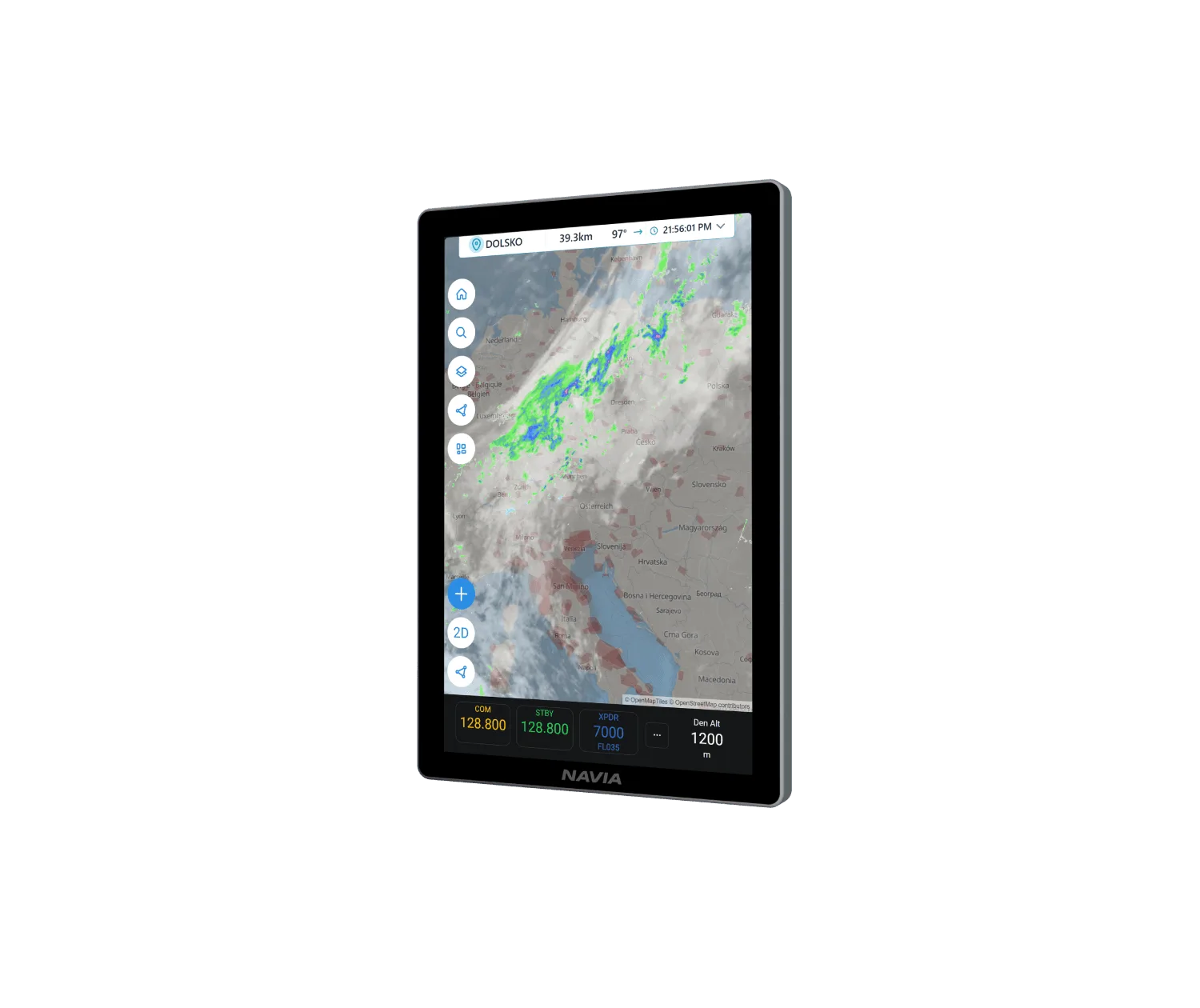
Details.
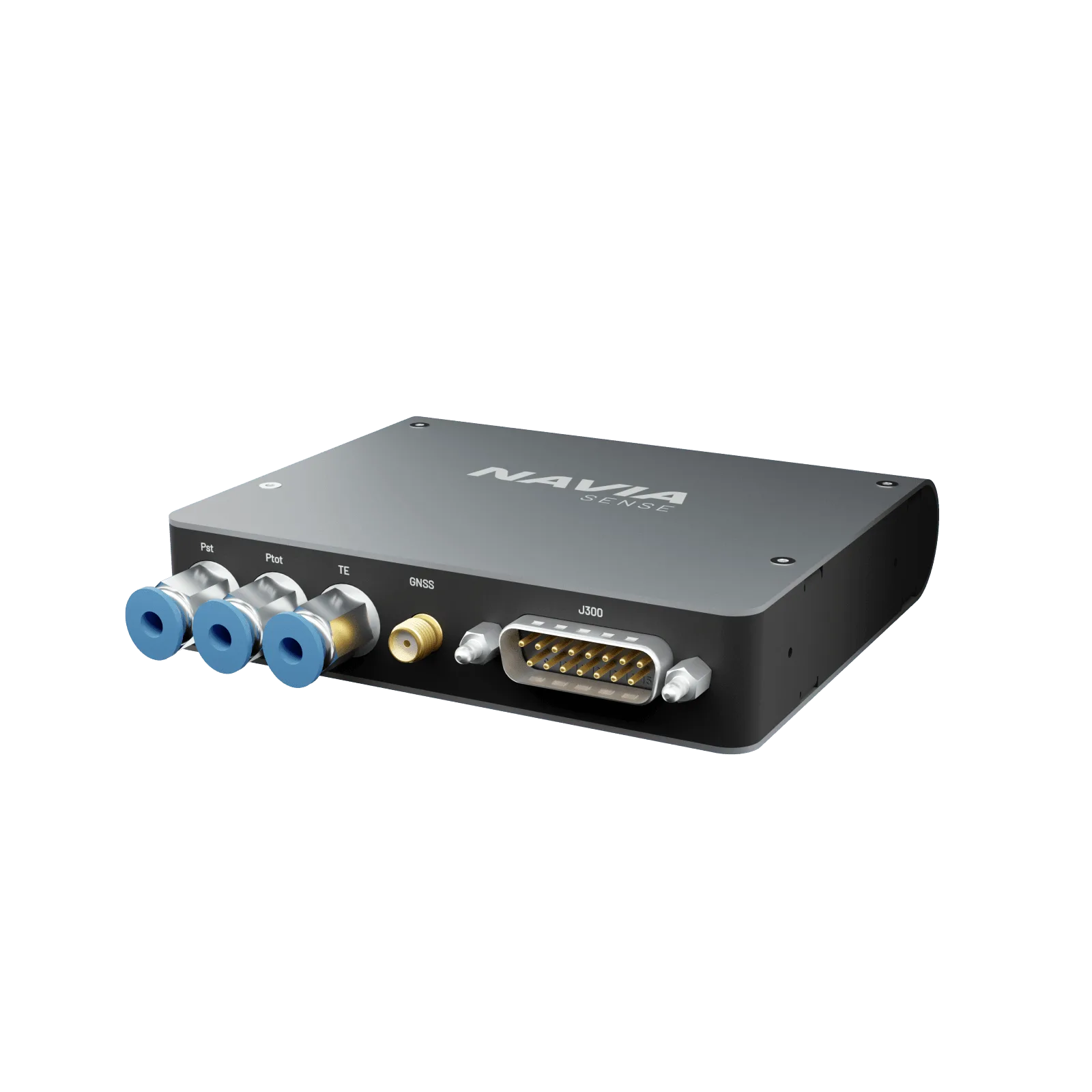
Navia Sense is where the Navia system measures the air. The Airplane Pro HS is the Airplane Pro with a high-speed sensor in place of the standard one: airspeed to 500 kt, altitude, an AHRS, an angle-of-attack sensor, an outside-air-temperature input and a GNSS receiver running at 25 Hz with SBAS correction.
Why a separate version
The standard Navia Sense carries 0–100 mbar differential pressure sensors, chosen because they are exceptionally accurate in the range where gliders and most light aircraft live — up to 250 kt. Faster aircraft push past what they can measure. The HS replaces them with a sensor that reads safely to 500 kt, at the cost of a little of the low-speed resolution the standard unit has. If your aircraft cruises above 250 kt, this is the Sense to specify.
Angle of attack included
Like the Airplane Pro, the HS has its own AoA pressure port: a stall margin on the Navia Display and a stall warning in the Grip that come from the wing rather than from a remembered speed.
Redundant by design
Paired with the Core Pro, the Sense gives the system its own air data and its own position, so a failure elsewhere does not take the flight instruments with it. Optional field pressure calibration keeps the readings honest over the years.
In the box
The Sense unit, its GNSS antenna, and the OAT sensor with crimped pins ready for the J300 connector set. The Sense wires to a serial port on the Core Pro; the J300 connector set is the mating half.
In the airframe
- 22 × 104 × 101 mm, 138 g
- 5 V, 0.8 W
- Two M2 threaded holes each side
- DO-160 qualified: −20 to +55 °C operating
Fly Navia before it reaches your panel.
The glider build of Navia OS runs in your browser — on a laptop at home or on a tablet at the airfield. Plan a task, move the widgets where you want them, set up your pilot profiles. Sign in with your LX Cloud account and none of it is throwaway: Navia carries a built-in worldwide eSIM, so everything you prepared on the ground is waiting for you in the cockpit the next time the instrument connects.
Free, in any browser. Sign in with your LX Cloud account rather than continuing as a guest — that is what keeps your tasks, layouts and profiles.
Questions pilots ask.
When do I need the HS?
When your aircraft cruises above 250 kt. The standard 0–100 mbar sensors are exceptionally accurate up to 250 kt; the HS reads safely to 500 kt at the cost of a little low-speed resolution.
Does it include angle of attack?
Yes — like the Airplane Pro it has its own AoA pressure port, giving a stall margin on the Navia Display and a stall alert in the Grip.