
Eight new Academy articles — and twenty new guides in the knowledge base
Flaps, energy on final glide, the protocol your instruments speak, an audio vario you can actually listen to, certification, ground loops, the turn-back and vapour lock. Plus twenty new guides written from our own manuals.
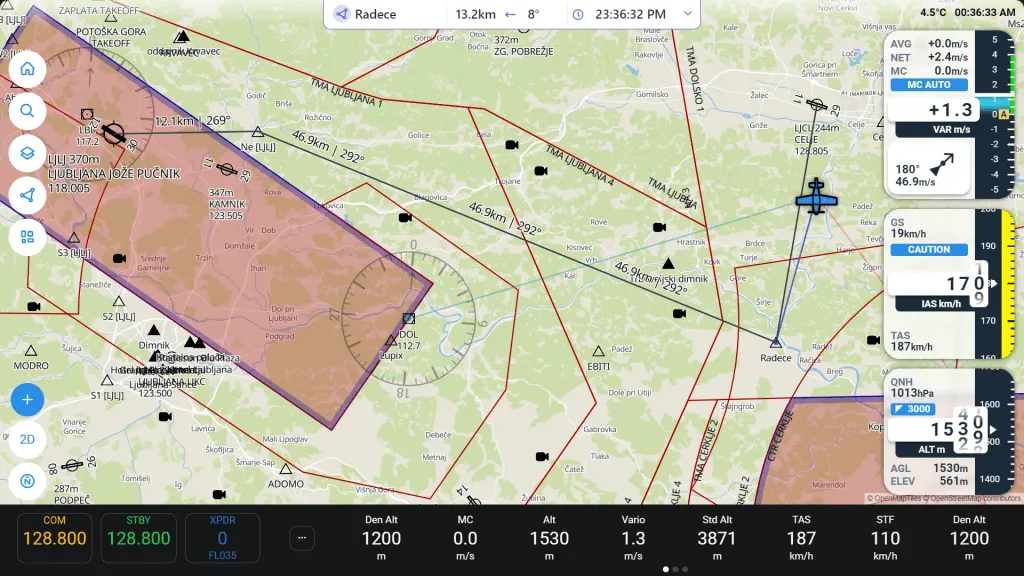
LX Academy is now forty-nine articles, all free and all built around a model you can pull apart rather than a diagram you have to take on trust. Today we are publishing eight more, written at the same desks in Celje where the instruments are designed — and alongside them, the largest batch of practical guides the knowledge base has ever had.
Eight new articles
- One glider, five polars — a flapped wing is a different glider at every notch, and the flap schedule in your manual is simply where the curves cross.
- Speed is altitude you have not cashed yet — your computer counts your speed as height on the final glide. The flight recorder does not, which is how a legal-looking finish loses a badge claim.
- Your instruments speak in sentences — the 1983 text protocol behind every tablet connection, with a live sentence builder and the checksum recomputed as you drag.
- The vario you fly by is the one you hear — pitch, chirp rate and the dead band, with a tone generator so you can hear two metres a second before you next need to recognise it.
- Certified is a sentence about paperwork — approved article, approved installation, required equipment: three different questions, and only one of them is answered on a product page.
- The hum in your headset is a wiring diagram — ground loops, star grounds, which end of a shield to tie, and the phone charger that quietly halved your traffic range.
- The impossible turn is a sum — engine failure after takeoff, with the 240 degrees nobody budgets for and the four seconds nobody plans for.
- Petrol boils sooner than you think — winter mogas on a summer climb, and the margin between the fuel in your line and the pressure around it.
Every one of them has a working model in the middle of the page. Slide a flap notch and watch which polar wins. Cross the finish line fast and watch the altimeter reading at the line fall while the reserve you set stays exactly where it was. Press Listen and hear a thermal. The point is not the animation — it is that the numbers behind our instruments are not secret, and a pilot who has played with them once flies differently.
Twenty new guides in the knowledge base
The knowledge base has grown from eight articles to twenty-eight, in two new sections. NAVIA now has its own: commissioning a new aircraft, accounts and display profiles, cloud synchronisation and flying offline, updates, troubleshooting, and four guides to the EMU, Sense and Traffic units. A Connectivity section covers pairing XCSoar and Oudie, wiring a radio, and the LX NMEA protocol for developers. And there are new device guides for the Colibri X, the PowerFLARM Eagle, the FLARM LED Display Pro and the Traffic Square, an article explaining every warning the Era and LX 10K can show you, a glossary of every term on the screen, and an honest page about what still exists for a Zeus, an Eos or an LX 7007.
All of it is written from our own manuals, and all of it is open. The list of what pilots asked for next sits on the same desk as the articles — if your question is not there yet, send it.
Stories like this by email — firmware releases, new instruments and show dates, a few times a year.