

Sense
The most advanced sensor unit we have ever built. Meticulously calibrated sensors deliver unwavering accuracy across all temperatures — from takeoff to landing.
Documentation →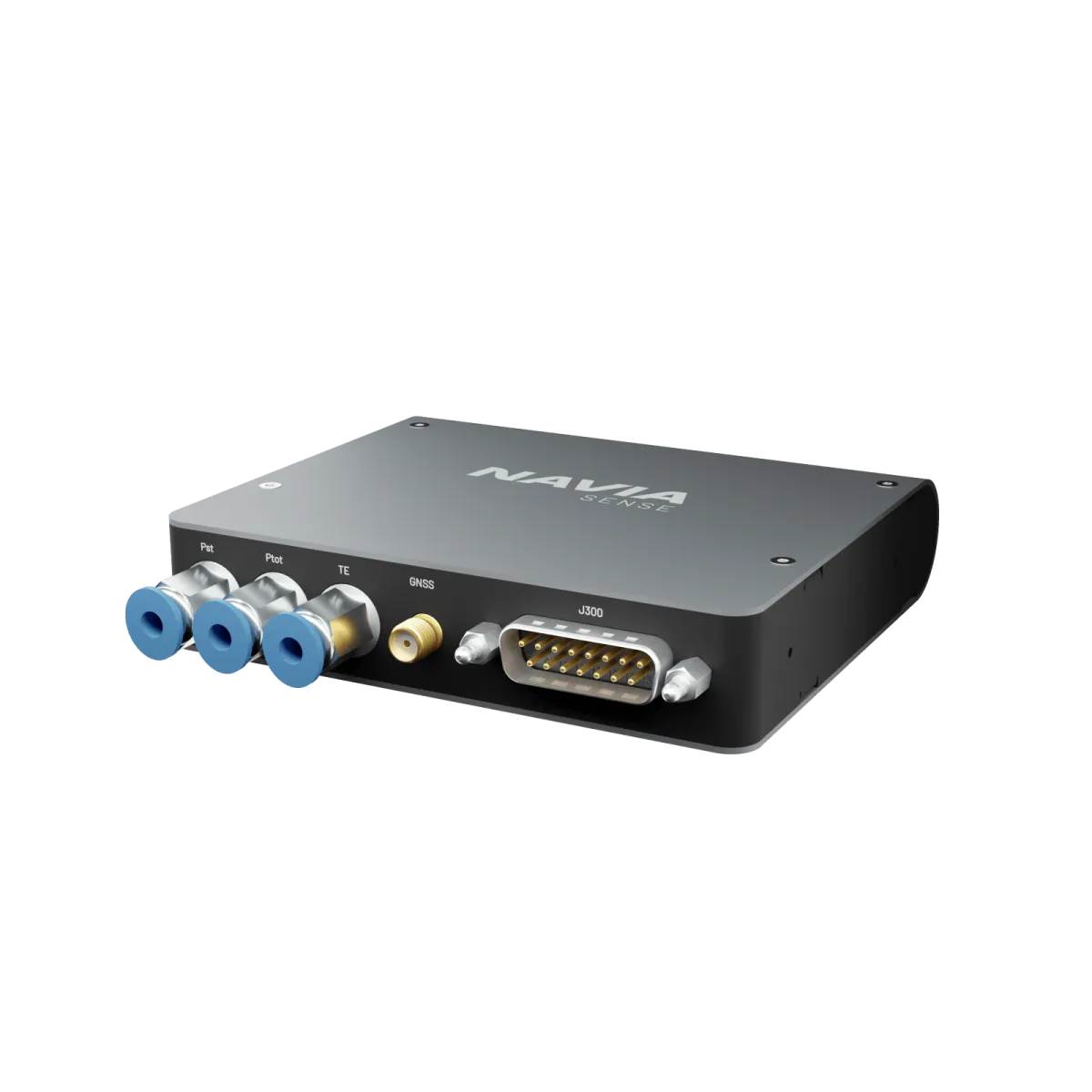
Flying gliders?
Three Sense variants for soaring — from club standard to full inertial wind and vario.
Flying airplanes?
All-in-one sensor suites for powered aircraft — up to 500 knots.
Trust your data.
Every unit ships individually calibrated. Pressure, temperature and inertial sensors hold their accuracy across the full temperature envelope — so the numbers on your display are the numbers in the air.
Atmo 3D wind, from your Era.
Atmo is the 3D wind of the Era. Connect an Era with the Atmo licence to the Navia Core and, whenever its solution is locked, the Atmo wind is the wind every Navia display shows.
Discover Atmo →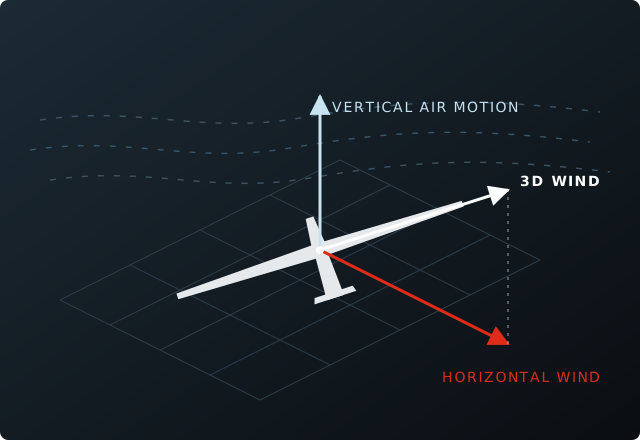
The air, measured once for the whole panel.
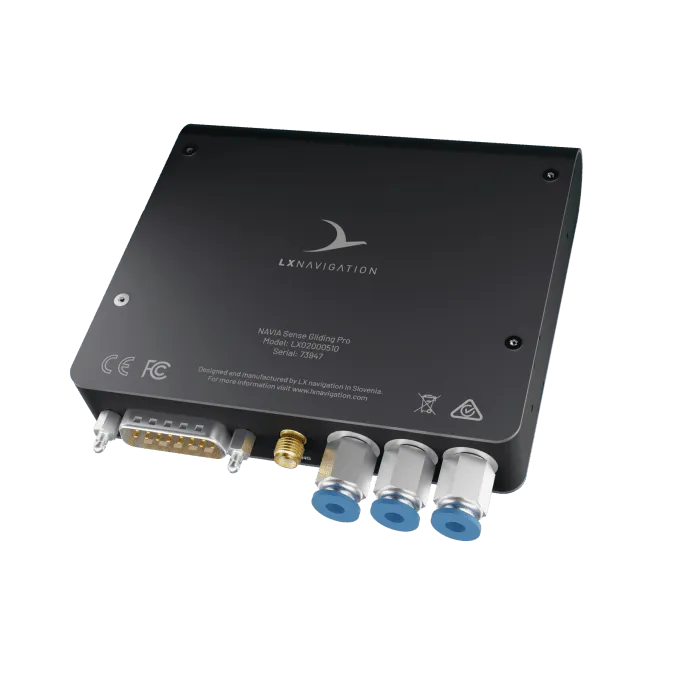
Sense turns pitot and static pressure, TE or angle-of-attack pressure depending on the variant, GNSS, outside air temperature and its inertial sensors into the flight data every Navia display shows. The gliding variants also hold the flight recorder.
Technical specification
- Supply voltage
- 5 V DC, from the Core Pro
- Power consumption
- 0.8 W
- Airspeed range
- Up to 250 kt · up to 500 kt on Sense Airplane Pro HS
- Flight recorder calibration
- Every 5 years
- Height in the rack
- 22 mm
- Mass
- 138 g
- Maximum altitude
- 49 000 ft
Navia is not TSO or ETSO approved. It is intended for VFR flight in gliders, motorgliders, ultralights, light-sport and experimental aircraft.
In the box
- Navia Sense
- Device registration card
- 4 M2 mounting screws
You will also need
- GNSS antenna
- PT1000 outside air temperature probe
- Connector set for the 15-pin connector
- Push-in pneumatic connectors and 6 mm hose
Good to know before you install.
- 01Sense runs on 5 V from the Core Pro only. Connected to the 12 V or 24 V aircraft bus it is destroyed at once.
- 02A Sense with AHRS is mounted level, with its connectors pointing in the direction of flight and the side marked THIS SIDE UP on top.
- 03Keep it away from steel parts, high-current cables, motors and magnets, and use non-magnetic tools around it.
- 04Mount the GNSS antenna horizontally with a clear view of the sky — not under metal or carbon fibre.
- 05After installation the attitude reference is levelled once on the ground. The compass calibrates itself in flight.
- 06Never open the housing: that breaks the security seal of the flight recorder.
This is an overview, not the installation manual. The manual for your unit governs the installation — follow it, or have an LX dealer do the work.
Questions pilots ask.
Can Sense be powered from the aircraft battery?
No. Sense takes 5 V from the Core Pro. Wiring it to a 12 V or 24 V supply destroys it.
Is the IGC flight recorder included?
The recorder is built into the Sense Gliding variants, and the Navia Sense IGC licence switches on signed IGC files. The recorder is due for calibration every five years.
What does Sense Gliding Pro+ add?
Pro+ is Sense Gliding Pro with instant wind and the inertial variometer switched on. It is a licence, so a Pro can become a Pro+ later without a change of hardware.
Which Sense is for a fast airplane?
Sense Airplane Pro measures airspeed up to 250 kt, Sense Airplane Pro HS up to 500 kt. Both measure angle of attack.
What else do I need to install a Sense?
A GNSS antenna, an outside air temperature probe, the 15-pin connector set, and pneumatic hose with its push-in connectors. None of these is in the box.
Can I fit two Sense units?
Yes. A second Sense on another serial port of the Core Pro gives the system a redundant source of air data and attitude.
Put it in a system.
Tell the configurator what you fly and how much panel you have. It puts the Navia system together, with prices.